Twitter - Real-time Marketing
In 2012, most brands were on Twitter but had no idea what to do there. The platform was growing fast, the consumer behaviour was clear, but the commercial case, and the creative playbook, hadn't been written yet. That was the job.
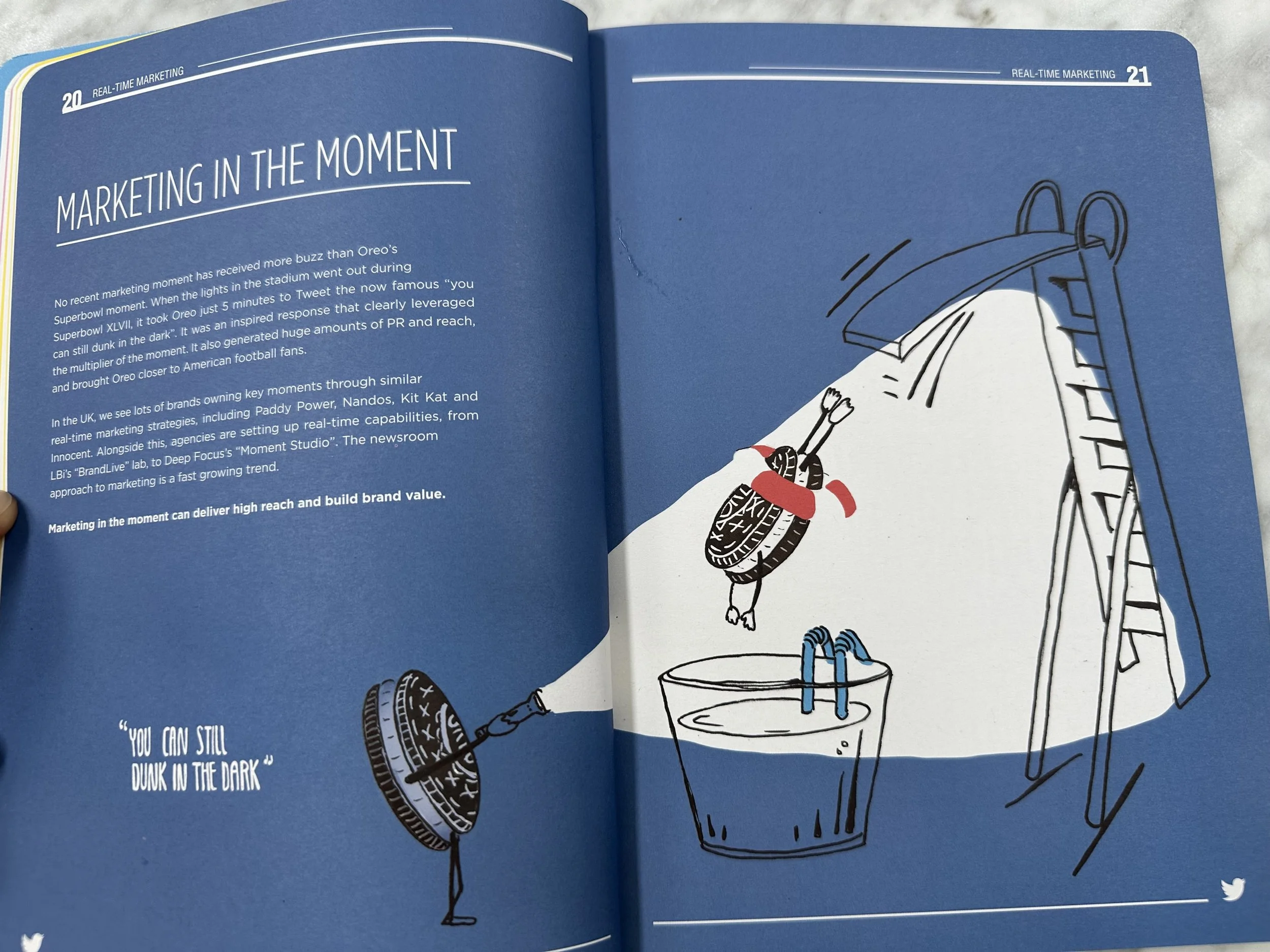
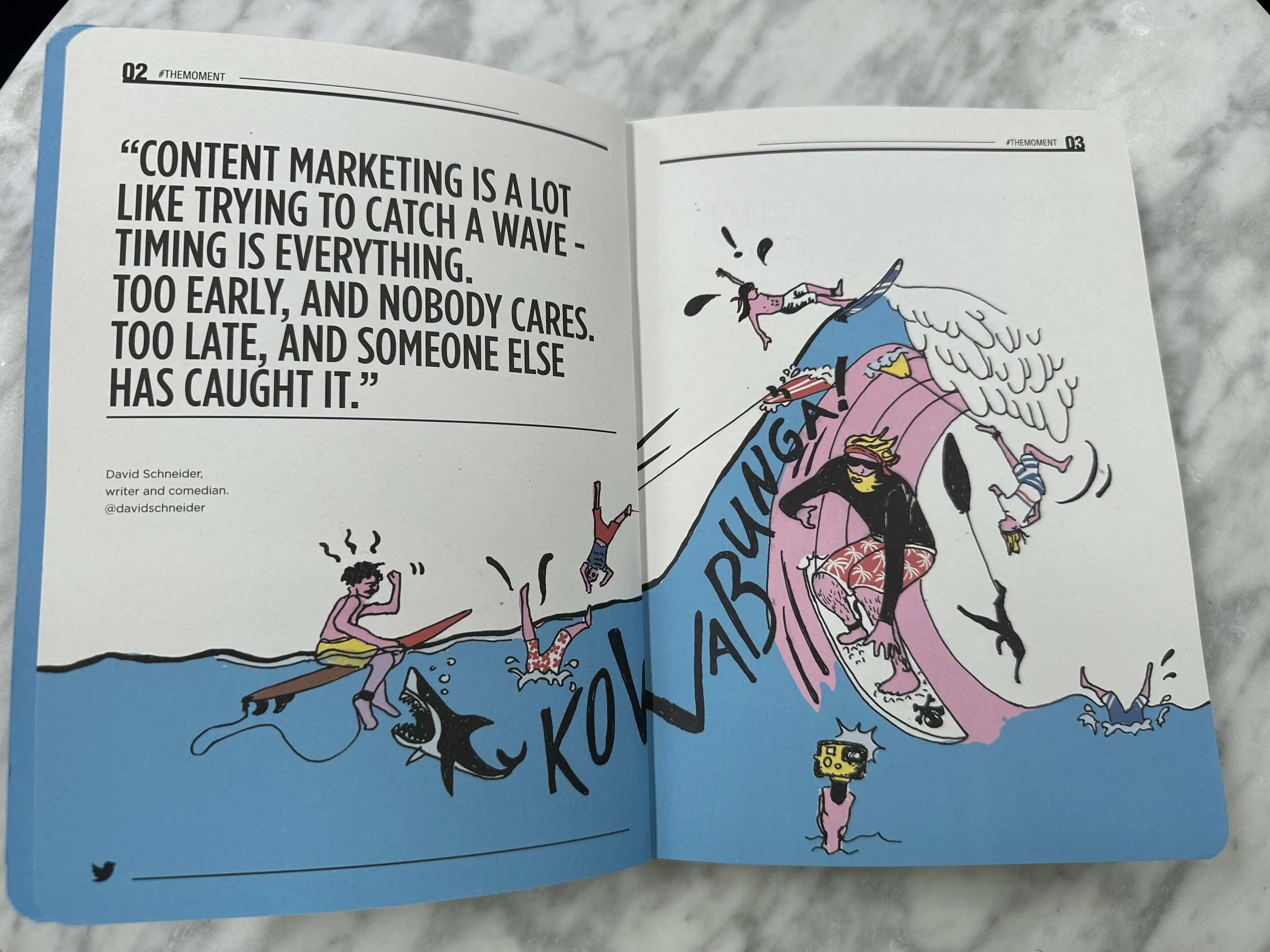
As part of Twitter's early B2B marketing effort in the UK, I helped build the case for real-time marketing: the idea that brands could, and should, act more like newsrooms, finding their moment in the cultural conversation rather than waiting for their next scheduled campaign. The Oreo "Dunk in the Dark" moment at the 2013 Super Bowl had proved it was possible. The question was how to make it repeatable.
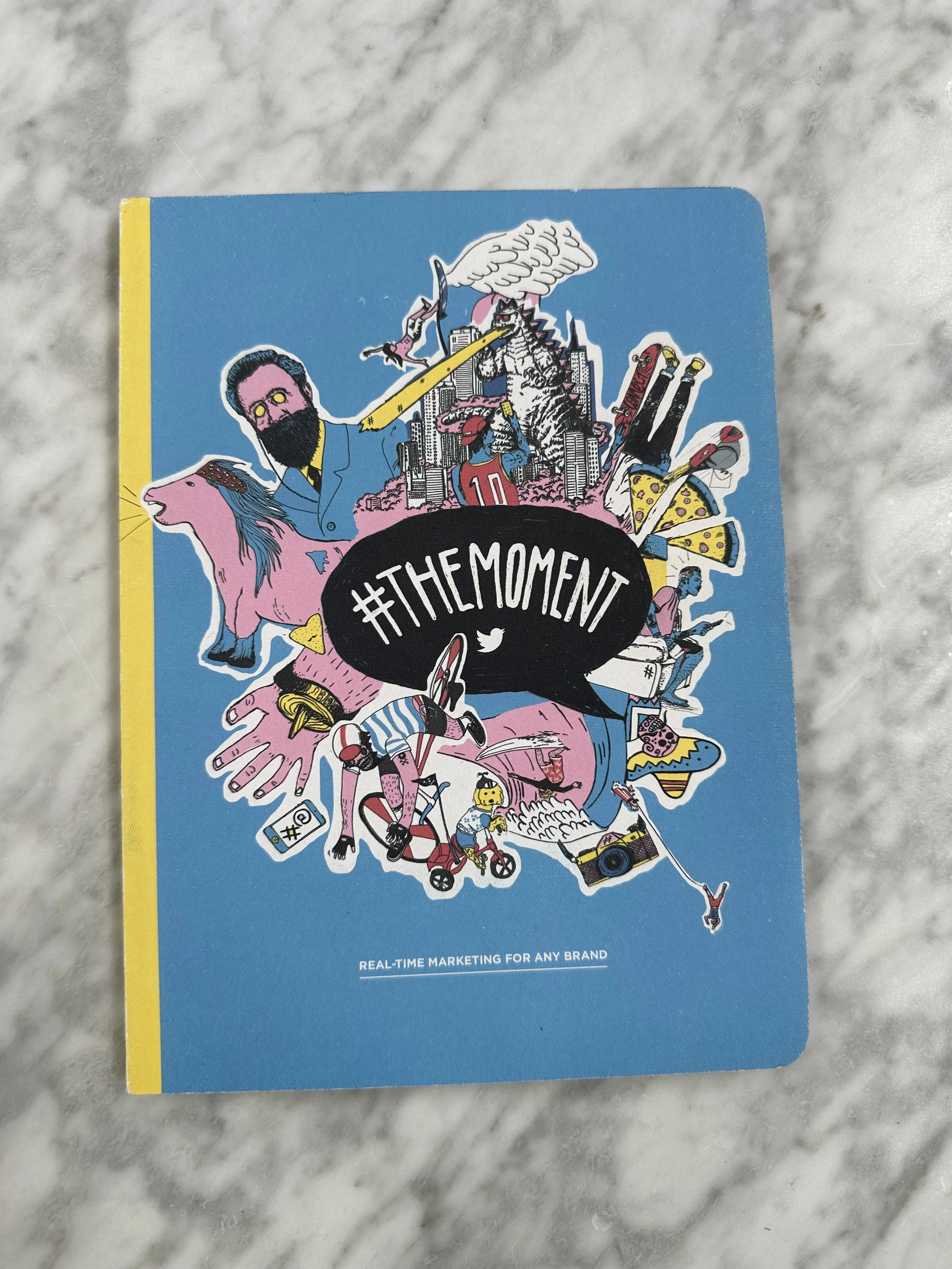
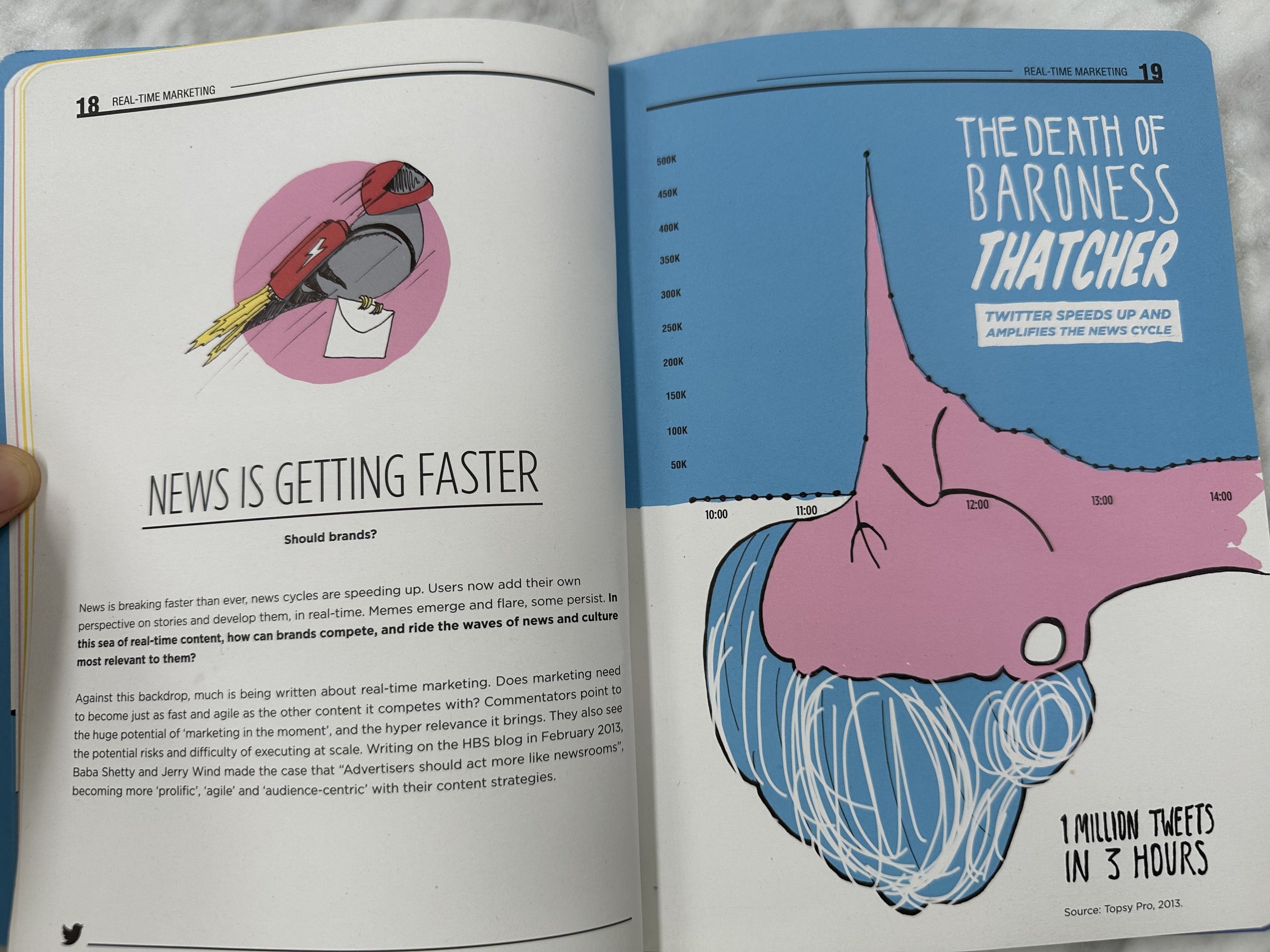
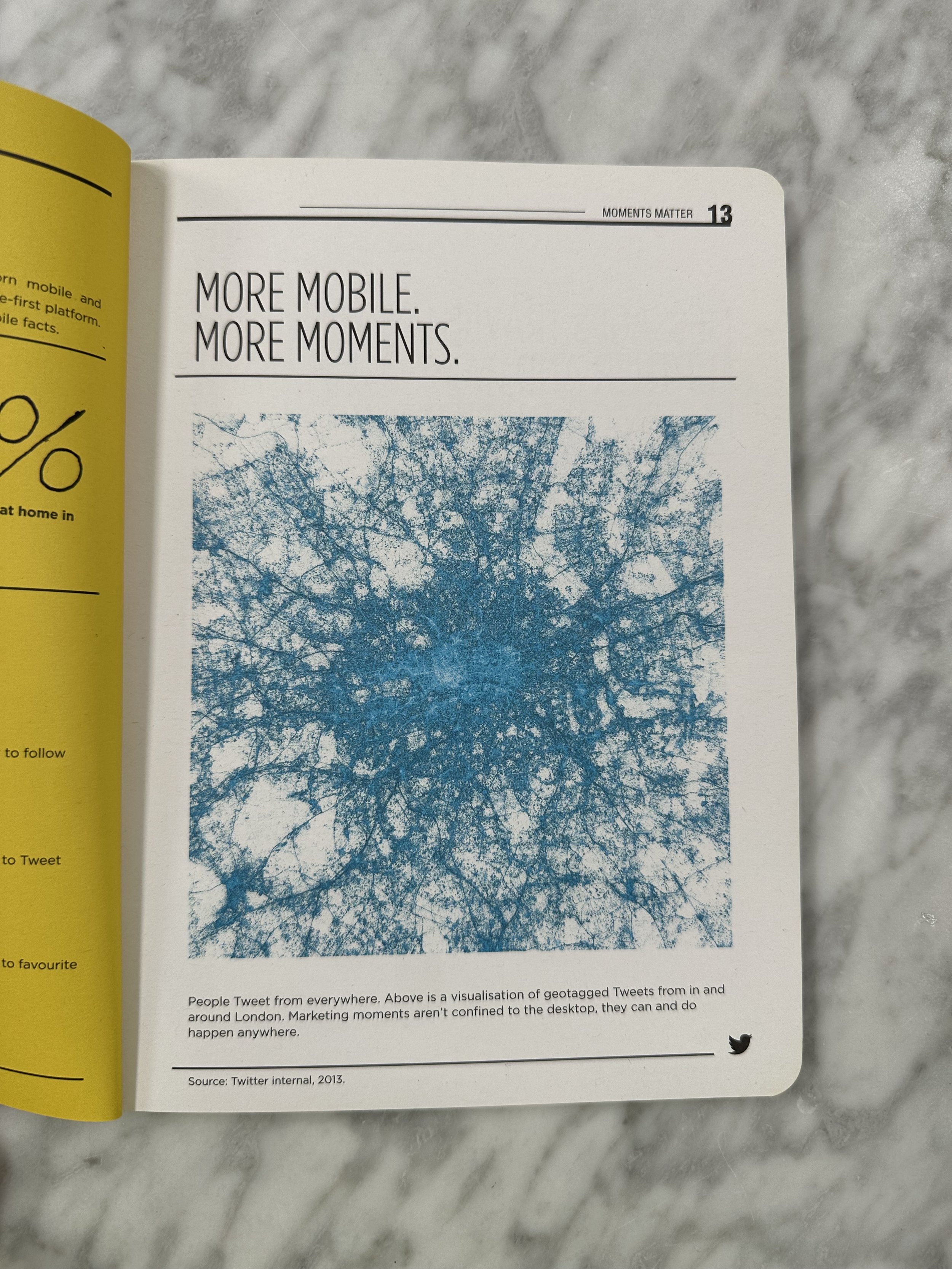
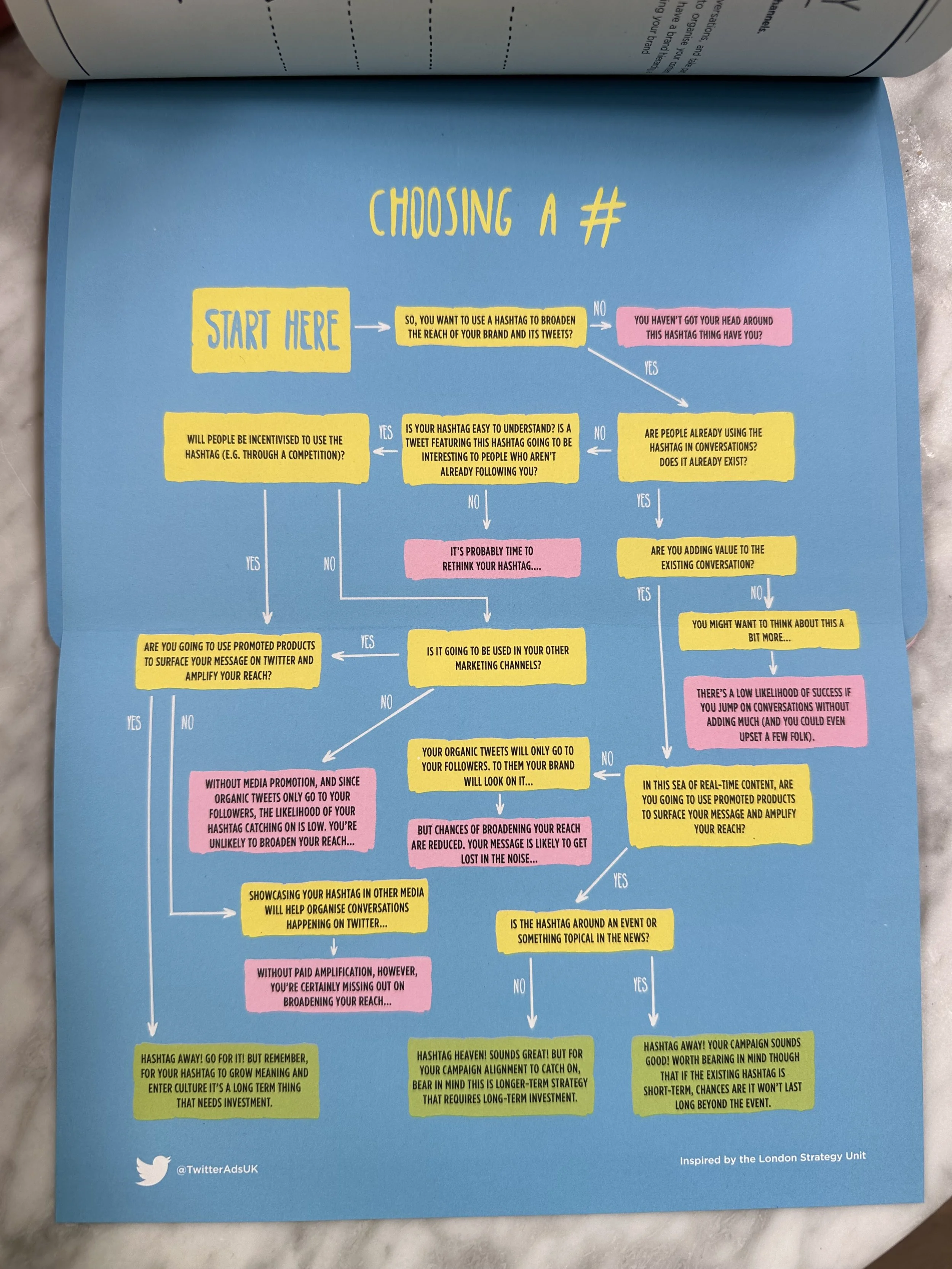
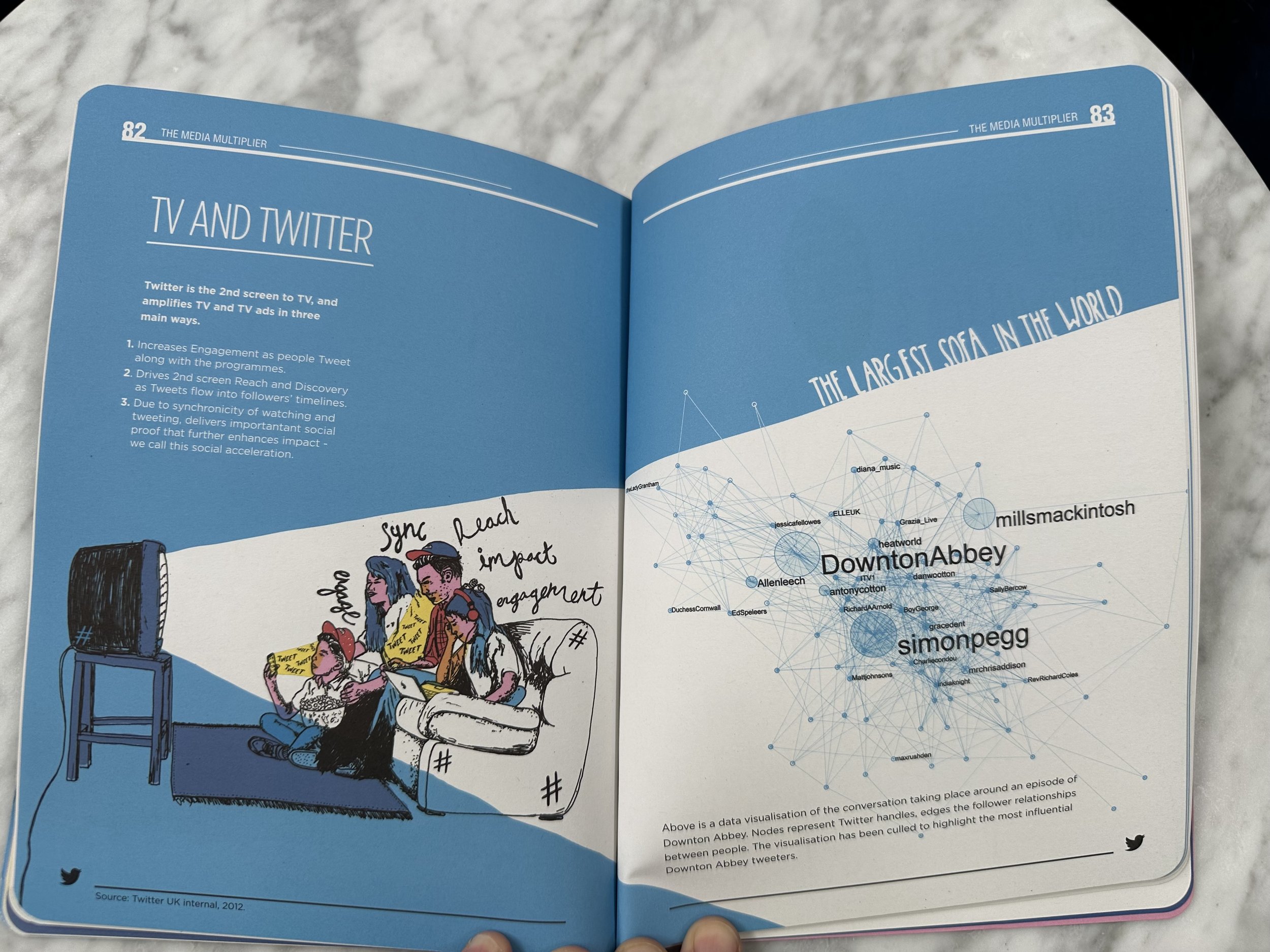
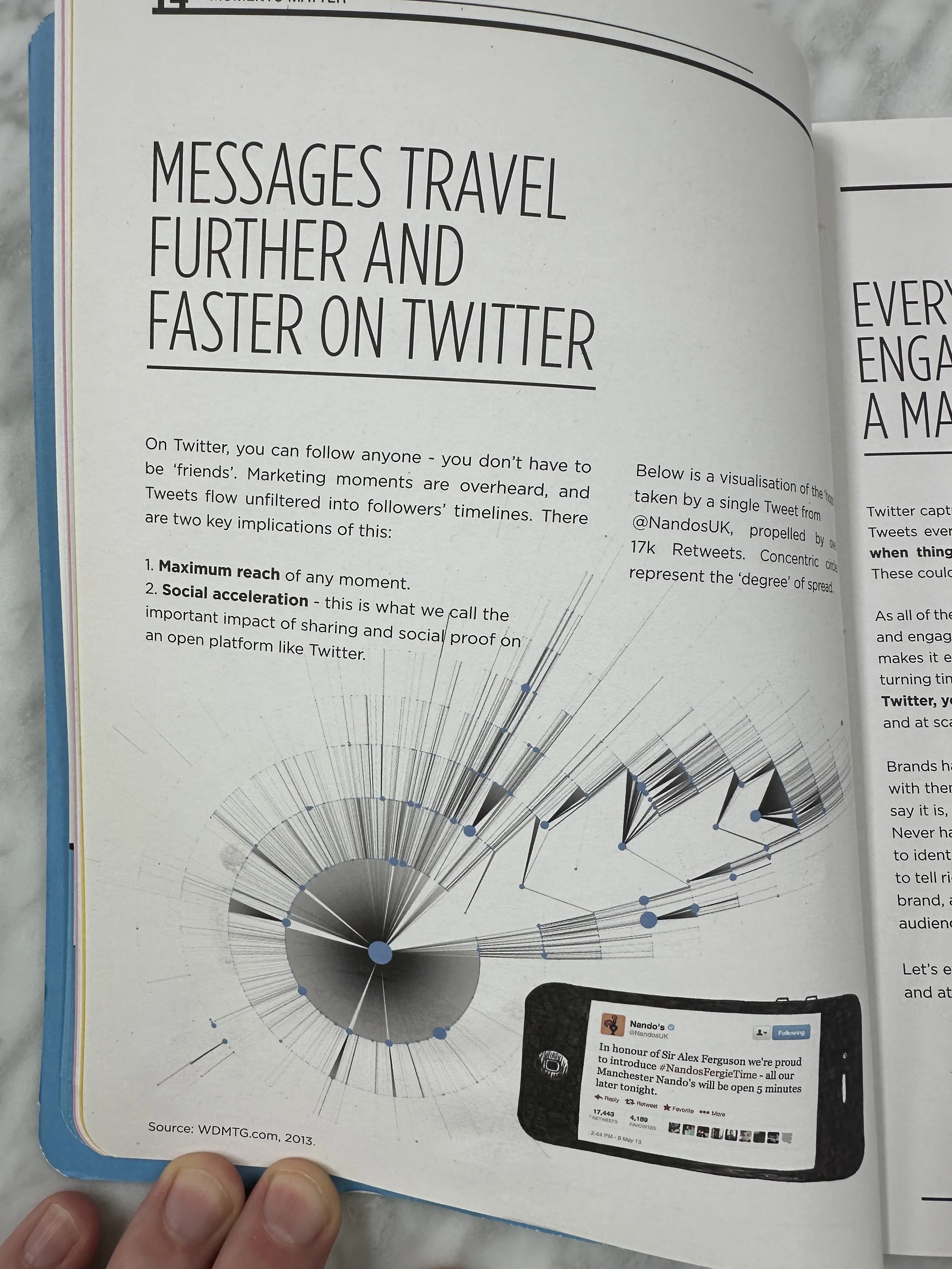
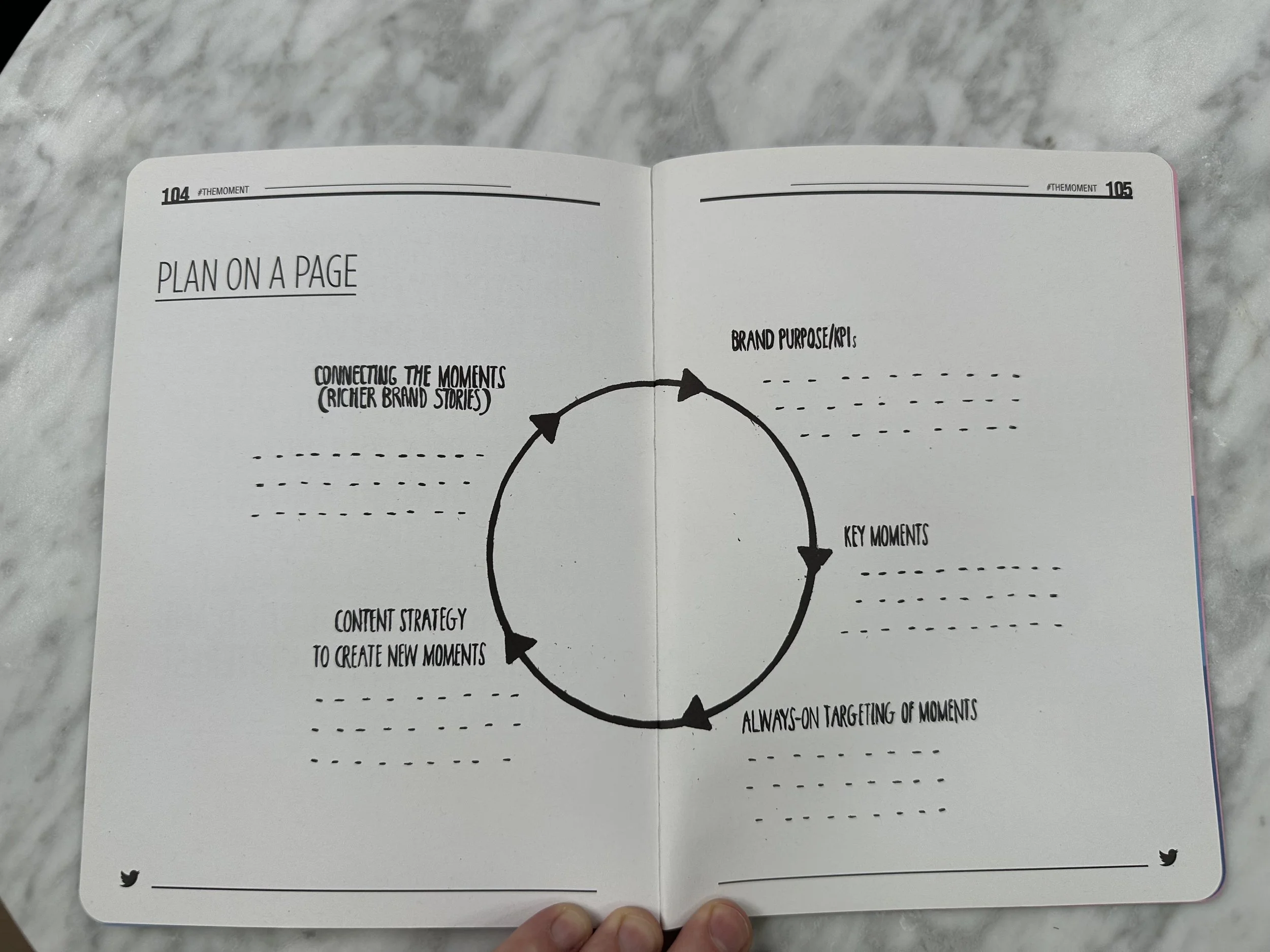
The result was #TheMoment, a practical guide to real-time marketing for any brand. Part strategy, part data, part decision tree. It mapped how Twitter accelerated news cycles (a million tweets in three hours when Baroness Thatcher died), how geotagged content showed that marketing moments weren't confined to desktops, and how brands like Nando's and Paddy Power were already riding cultural waves in real time. I presented the framework at Twitter's #Twitter4Brands series to audiences of marketers who were trying to figure out what this platform was actually for.
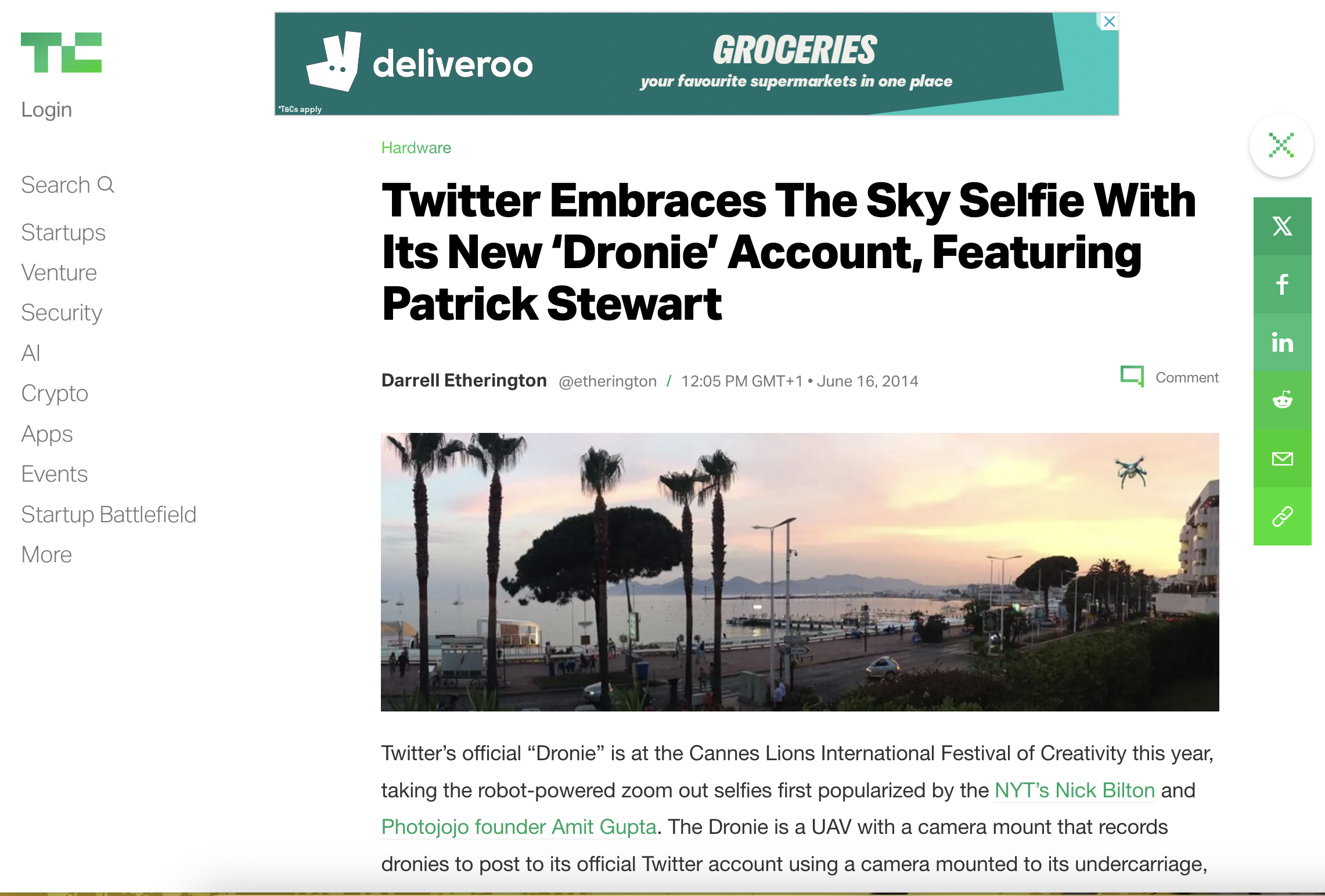
At Cannes Lions 2014, we took a different approach to the same brief. We attached a camera to a drone, before drone content was a category, and created the world's first "Dronie" series, featuring Patrick Stewart. It generated coverage in TechCrunch, Adweek and The Drum, and became one of the most talked-about stunts at the festival that year.
The platforms have changed. The principle hasn't.